Слава Ісусу Христу! Glory be to Jesus Christ!
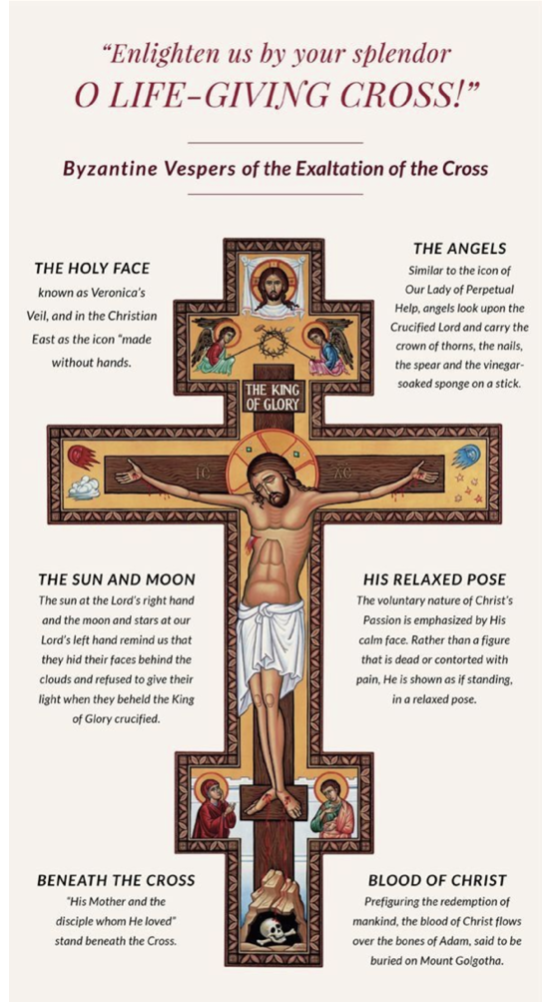
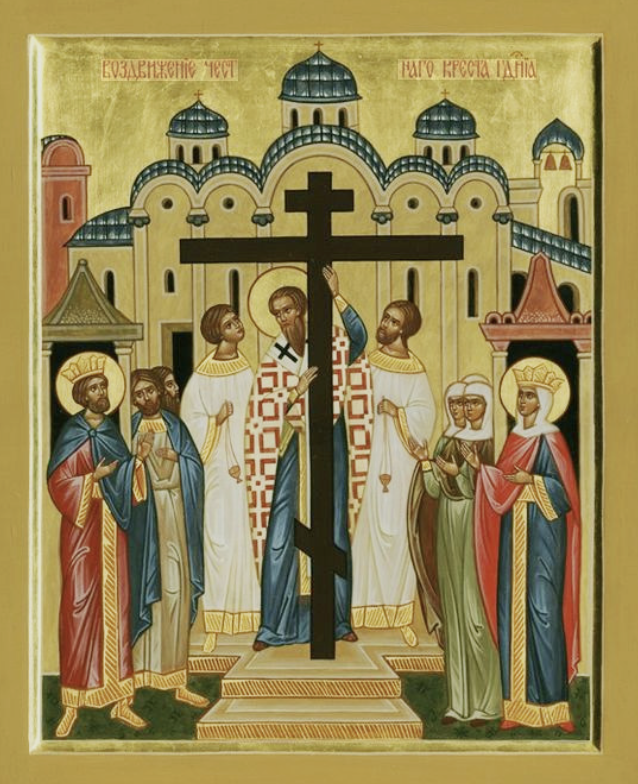
The Feast of the Exaltation of the Precious and Life-Giving Cross is celebrated on 14 September. It proclaims the Cross not as Christ’s defeat but as the instrument of his victory over sin, death, and evil. The lectionary readings, 1 Corinthians 1:18–24 and John 19:6–35, connect the apparent humiliation of crucifixion with the revelation of divine power: What the world considers folly, the following verse sharpens the paradox: “the foolishness of God is wiser than men, and the weakness of God is stronger than men” [1 Cor. 1:25].
The early Church Fathers consistently present the Cross as both sacrifice and triumph. St Cyril of Jerusalem describes it as “the Cross is a Crown, not a dishonour,” and interprets the crown of thorns as a mystery “for it was a remission of sins, and a release from the curse” [Catechetical Lecture 13, On the Words, “Crucified and Buried”]. He teaches that Christ’s Cross is not a cause of shame, but for the Church to boast that the cross has reconciled heaven and earth. St. Cyril urges believers to confess the Crucified One without embarrassment. St John Chrysostom likewise describes the Cross as a victory over death and the devil: what appeared to be an instrument of execution became Christ’s trophy, for the crucified Lord destroyed death from within. This insight helps explain the feast’s paradox of why Christians exalt the Cross. The Cross reveals the self-emptying love (Kenosis) by which Christ conquers not through coercion but through obedient, life-giving sacrifice.